EN
EN



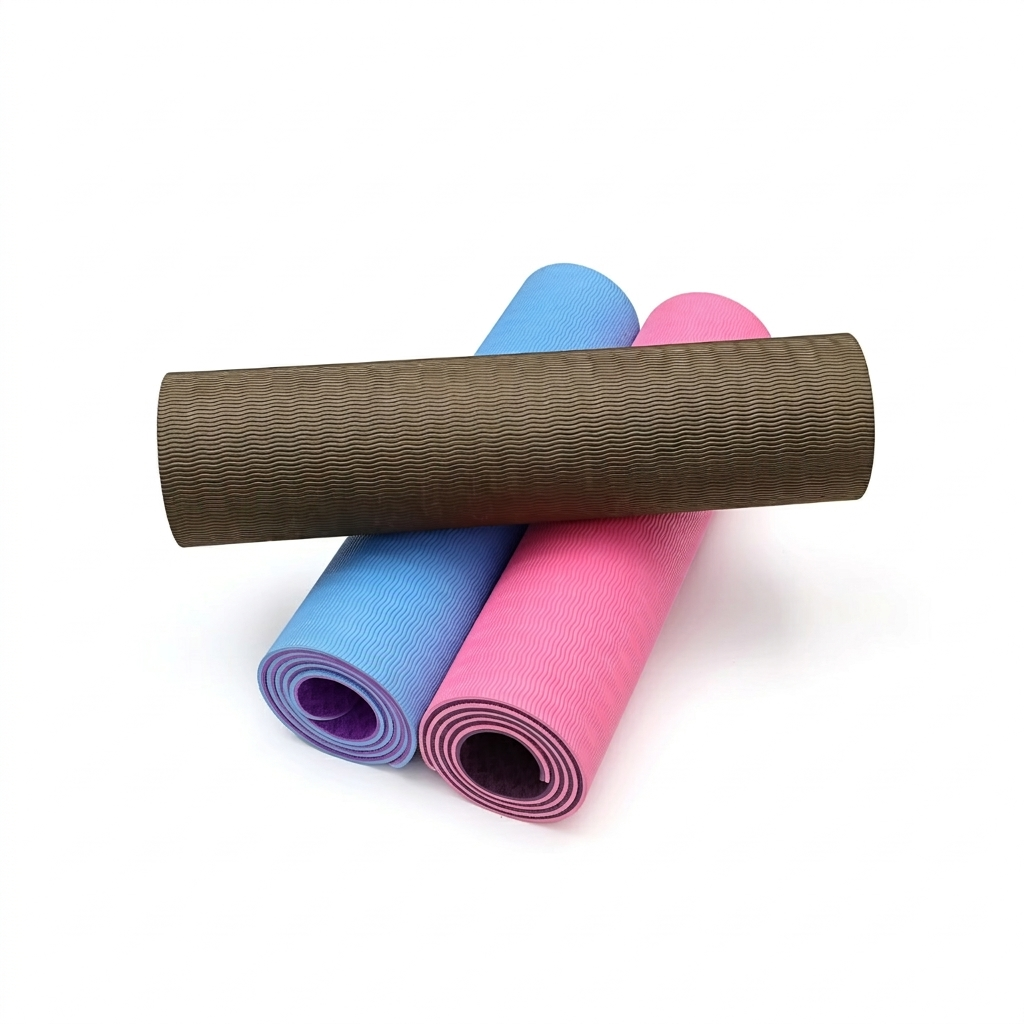
When you are sweating through a vinyasa flow or holding a long downward dog, the last thing you want is your hands or feet sliding across the mat. A truly non slip yoga mat is not a luxury; it is a safety necessity.
Over years of testing various yoga mat materials across different yoga styles—from gentle Hatha to sweat-drenching Hot Yoga—I have learned that a mat’s ability to stay put depends entirely on its material composition and surface structure. In this guide, I will walk you through the most common materials on the market and help you determine which one delivers the most reliable non slip yoga mat for your specific practice.
Comparing the top yoga mat materials: Rubber, PVC, TPE, and EVA
The market offers several material options for a yoga mat, each with distinct characteristics that affect grip, weight, and longevity. Natural rubber is widely regarded as the gold standard for wet grip. According to third-party testing, natural rubber achieves a wet-surface friction coefficient of approximately 1.94, the highest among all yoga mat materials, and contains no detectable phthalates or chlorinated paraffins. However, natural rubber mats are heavy (often over 2.5 kg), carry a distinct rubber smell, and are unsuitable for individuals with latex allergies.
PVC is the most common budget yoga mat material. It is durable and easy to clean but has serious limitations when wet—its wet friction coefficient drops to as low as 0.3, making it dangerously slippery in sweaty conditions. Additionally, many PVC mats contain 15–40% phthalates, which are restricted under EU regulations due to health concerns.
TPE offers a middle-ground solution for a non slip yoga mat. It is lightweight, recyclable, and free from plasticizers. Testing shows TPE achieves a friction coefficient around 1.51 on wet surfaces, with only trace amounts of volatile organic compounds that dissipate after a few days of airing.
EVA (Ethylene-Vinyl Acetate) foam delivers excellent cushioning at a low density of 0.91–0.95 g/cm³, making this type of yoga mat lightweight and portable. While some general-purpose EVA foam mats have been criticized for lower wet grip, high-quality EVA formulations designed specifically for yoga can incorporate textured surfaces that significantly enhance traction. For practitioners who prioritize comfort and portability without completely sacrificing grip, a well-designed EVA yoga mat can be a smart choice. Understanding these differences is the first step to finding your ideal non slip yoga mat.
Safety first: What makes a yoga mat truly non slip
Slip resistance is not a subjective feeling—it can be measured. Independent laboratories test yoga mats using standards such as SS-EN 14882:2019, where a 700-gram pulling body is dragged across the mat surface to record the coefficient of friction. The higher the coefficient, the better the slip resistance of your yoga mat. For gym flooring applications, industry experts target a static coefficient of friction above 0.6 in dry conditions to prevent slips while avoiding excessive “sticking” that could lead to joint injuries.
When selecting a non slip yoga mat, you should look beyond marketing claims and examine the actual surface texture and cell structure. Open-cell surfaces, like those found on many premium natural rubber and PU mats, absorb moisture to create grip when wet. However, open-cell mats require thorough cleaning after each use to prevent bacterial buildup and tend to show wear more quickly than closed-cell alternatives.
Closed-cell surfaces, by contrast, do not absorb moisture. This makes them easier to wipe clean and more hygienic overall, but they rely entirely on surface texture for traction. A high-quality EVA yoga mat with an embossed or textured pattern can achieve reliable grip even with a closed-cell structure. A truly safe yoga mat must pass both grip and stability tests.
Health and environmental standards you should demand for your yoga mat
What you cannot see can hurt you. Many low-cost yoga mats contain phthalates, BPA, heavy metals, or formaldehyde that off-gas volatile organic compounds into the air you breathe during practice. Independent reviews have identified formaldehyde exceedances in some EVA mats and the presence of butadiene—a known carcinogen—in NBR mats.
To protect yourself, look for a yoga mat that carries third-party certifications such as OEKO-TEX Standard 100, REACH compliance, or SGS testing. These labels confirm that the product is free from harmful substances and safe for prolonged skin contact.
Responsible manufacturers also test for flammability. In automotive interior applications, FMVSS 302 requires materials to self-extinguish within 100 mm of ignition, with a maximum horizontal burn rate of 102 mm per minute. While a yoga mat is not legally required to meet automotive standards, choosing a mat that has undergone rigorous safety testing—including flammability assessments—adds an extra layer of protection for home use. When evaluating an EVA yoga mat, prioritize formamide-free formulations that meet strict EU safety standards, as these are designed to be safe for both adults and children. Don't compromise your health when choosing a yoga mat.
Open cell vs. closed cell: How structure affects grip and maintenance of your yoga mat
Understanding the difference between open-cell and closed-cell foam is essential for choosing a non slip yoga mat. Open-cell foam has a porous surface that absorbs moisture. When you sweat, the moisture is drawn into the mat, creating a sticky, tacky feel that enhances grip. This makes open-cell mats excellent for hot yoga and intense, sweaty practices.
The trade-off is maintenance: because open-cell mats absorb sweat and bacteria, they must be cleaned thoroughly after every use to prevent odor and germ buildup. Over time, the absorbent surface can also show signs of wear more quickly.
Closed-cell foam, on the other hand, is essentially waterproof. The surface does not absorb moisture, so sweat beads on top rather than soaking in. This makes closed-cell mats incredibly easy to clean—a simple wipe with a damp cloth or a quick rinse is usually sufficient. However, because they do not absorb moisture, closed-cell mats rely on surface texture to provide traction. A well-textured closed-cell EVA yoga mat can offer dependable grip without the maintenance burden of an open-cell mat. For practitioners who practice in non-sweaty environments or prefer a low-maintenance option, a high-quality closed-cell yoga mat is often the better choice. Your choice between open-cell and closed-cell yoga mat depends on how you practice.
Real-world testing: What to look for when you unroll your yoga mat
After years of practicing on different mats and consulting with yoga instructors, I have developed a simple hands-on checklist for evaluating slip resistance before committing to purchase a yoga mat.
First, place the mat on a smooth floor surface and press down firmly with your palms. Push forward—if the mat slides against the floor, the bottom-layer grip is inadequate. Second, perform a “downward dog test” on the mat’s top surface with slightly damp hands to simulate sweaty conditions. A truly non slip yoga mat should hold your hands in place without any forward or lateral movement.
Third, check the mat’s thickness and weight. Thicker mats (6–8 mm) offer more cushioning for sensitive joints but may feel slightly less stable for balance poses. Thinner mats (3–5 mm) provide better ground feedback and stability but less impact protection.
Finally, consider your practice style. For slow, gentle practices where sweating is minimal, a closed-cell EVA yoga mat with good texture works perfectly. For hot yoga or power vinyasa, an open-cell natural rubber or TPE mat may be worth the extra cleaning effort. These simple tests will help you evaluate any yoga mat before buying.
Long-term value: Balancing cost, durability, and maintenance of a yoga mat
A yoga mat is an investment in your practice, not a disposable item. The cheapest mats often cost more in the long run because they need frequent replacement. Many low-cost foam mats begin crumbling, flaking, or tearing within months of regular use, especially under the concentrated pressure of wrists and heels.
Natural rubber mats, while expensive initially, can last for years with proper care. TPE mats offer a balanced lifespan and are recyclable at end-of-life. EVA yoga mats fall into the affordable-to-midrange category. With a density of 0.91–0.95 g/cm³, EVA is lighter than PVC and provides excellent shock absorption. High-quality EVA mats, when properly cared for, resist compression set and maintain their cushioning properties over time.
To maximize the lifespan of any yoga mat, avoid leaving it in direct sunlight or hot cars, as heat accelerates material breakdown. Clean your mat regularly according to manufacturer instructions—mild soap and water work well for most closed-cell mats, while open-cell mats may require specialized cleaners to prevent bacterial growth. A mat that stays clean and well-maintained will serve your practice faithfully for years.
For a reliable, non-toxic EVA yoga mat that combines lightweight portability with dependable grip, check out the selection at eva-foam.com — where all products meet REACH safety standards. A quality yoga mat is an investment that pays off over years.
Table of Contents
- Comparing the top yoga mat materials: Rubber, PVC, TPE, and EVA
- Safety first: What makes a yoga mat truly non slip
- Health and environmental standards you should demand for your yoga mat
- Open cell vs. closed cell: How structure affects grip and maintenance of your yoga mat
- Real-world testing: What to look for when you unroll your yoga mat
- Long-term value: Balancing cost, durability, and maintenance of a yoga mat